My wyfe and I enjoy exploring old cemeteries and taking pictures and video. About 20 minutes from where we live is this one cemetery located out along a gravel road up on the local mountain. The area was known as Pandemonium and the Pioneer cemetery once served the settlement. Back in the day this area had a water mill, a tannery and a lumber industry. A short drive up Laurel Run Road takes you to the area and the cemetery is located up a short driveway off of the main road. It is secluded and peaceful. While we were there, last night, there was some animal out a bit in the woods watching us. I could hear it moving about now and then. Probably a bear or a deer. There are a lot of cabins along the road where people stay when they are hunting or just want some welcome solitude.
Author: KB3CVO
CQing for fun and prophet
There is a lot to be said for CW. You listen for a clear frequency and start sending. Usually it is CQ CQ CQ this is (insert callsign here twice) Over. In International Morse Code that would be -.-. –.- -.-. –.- -.-. –.- -.. . followed by call sign then .- .-. In a way it is like fishing. You cast out your call as bait and see who bites. Depending on the band and time of day it could be anybody anywhere. My cats are fascinated with the whole process. They like the tone being sent and enjoy grabbing at my hand while I am sending.
Right now I am on 40M looking for contacts with SKCC club members. SKCC is the Straight Key Century Club which is a club of CW enthusiasts who use straight keys. Sometimes that can get difficult for me as I have a mild form of Carpal Tunnel but I make do. It is relaxing to hear the sound of CW coming over the radio and it is a great way to pass time.
Morse Code was invented ~1837 and went into use ~1844. Untold miles of telegraph wire was strung up and for years it was the main means of high speed communications. When radio came along, Morse Code was the primary means of transmission and even to this day remains popular with amateur radio operators.
The Attraction: Why I like ham radio
A person could ask what do I find attractive about Amateur radio. To answer that we will have to delve into the past. When I was a kid I used to sneak a transistor radio into my bed at night and listen to AM radio stations, including WBZ out of Boston. The very idea of hearing stations from across the country was mystical. I found back in 1998, that ham radio had the same sort of magic but now I could reply to and interact with the disembodied voices. When I first started I was impressed with the friendly people who were very helpful to a newby. Some of them are gone now but will always remain in my memory.
These days I use CW on the HF bands and occasionally SSB when there is a special event station I want to work. I belong to a couple of CW clubs on the air : FISTS which is the Morse Code Preservation Society and SKCC which is the Straight Key Century Club which promotes the use of manual telegraphy. I have delved into some of the digital modes from time to time and plan on getting more into them. In 1998 I was introduced to Packet Radio which had past its peak but was still used. You could connect from node to node and communicate keyboard to keyboard across the country. I was lent an old IBM luggable computer to run packet and it was perfectly adequate to the task even though it was an antique at this point. Sometimes the harddrive would stick when it was booted and you had to give it a whack with something like a screwdriver handle to jog it into action. After a few years packet pretty much faded into obscurity, replaced by modes suck as PSK31, and now FT4 and FT8.
So on my commute to work I mostly use 146.520 MHz which is a frequency known for non-repeater use. I have had many conversations with hams both local and travelling through. I do get on repeaters now and then, in particular the TARA repeater on 147.045 + ctcss 146.2 Hz and the W3ND repeater 444.550 + ctcss 123.0 both of which cover Perry County very well. If you hear me on a repeater or on simplex, give me a call. On roadtrips I usually program my radio with a list of repeaters along the route One trick I learned is to make every 10th memory slot 146.520 so you can switch easily to simplex. This makes it very handy along long routes as some repeaters do not get a lot of activity.
So there is my latest entry. More to come.
My Do List
My do list for the coming week is pretty simple. I am going to construct a 30 M dipole and I am having a friend come over for some tower work. I can’t climb due to balance issues but I still do a good job as a ground person.
What I need done on my tower is the removal of one antenna and the installation of another one along with attaching some pullies at the top of the tower. Simple stuff, right? The antenna I am having taken down is a 2 M cubical quad that has been up there for about 18 years. The weather got the best of it and it needs removal. The replacement is a dual band vertical (2 M and 440). This will allow me to reach some of the local repeaters here in Perry County.
A question answered for your enjoyment
What was SAREX? Hint: 1983
The SAREX program (initially Shuttle Amateur Radio Experiment and later called Space Amateur Radio Experiment) was started in 1983. On November 28, 1983, Owen Garriott (W5LFL) became the first licensed ham in space. He used a handheld 2-meter radio to talk to his mother, senator Barry Goldwater, King Hussein of Jordan (JY1), and many others. He made around 300 calls and convinced NASA to initiate the SAREX Program It was used to get school children interested in space and the STEM disciplines. In 1985 Anthony England (W0ORE) made 130 contacts and sent 10 slow scan images from the Challenger filght STS-51F. After these pioneering efforts, amateur radio became a regular fixture on shuttle flights and later on on the International Space Station. On some flights the entire crew were licensed amateur radio operators. After about 25 flights, the program evolved into the ARISS around 1996. There was a couple of years of overlap between the programs. ARISS (Amateur Radio on the International Space Station) remains very popular to this day. Astronauts and Cosmonauts on the station can make contacts during their off time and a lot of Earthbound amateurs take advantage of the program. There are even schools that set up schedules so that their students can have the opportunity to contact the space station.
A Fresh Start
Howdy. I am starting a new blog about ham radio. It may not be the only subject but it will be the primary focus. Sit back and see where my mind takes us!
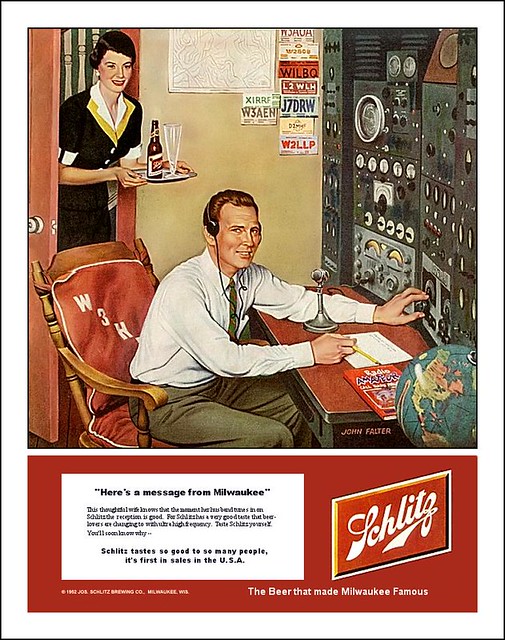
According to the ARRL (American Radio Relay League), Amateur Radio (ham radio) is a popular hobby and service that brings people, electronics and communication together. People use ham radio to talk across town, around the world, or even into space, all without the Internet or cell phones. It’s fun, social, educational, and can be a lifeline during times of need.
In this blog I intend to publish matters of interest to hams and to the general public. Feel free to leave me feedback and suggestions!
 Nature, Radio, and Me