Hello kidlets. Here we are with another installment of my non-stop prattle and pseudo-intellectualism dressed in folksy pleasantries. It has been a good couple days off and it is nice to sit drinking coffee and relaxing.
First some thoughts about antennas. Some people like Yagis, some prefer verticals and some like dipoles. The whole thing comes down to a matter of preference. If you are out activating or working portable in general, you want the best antenna that will fit your budget. When I am portable, I generally use “Hamsticks” which are mag mounted verticals. I have also used dipoles and other types of antennae such as “Buddisticks”. Some take along verticals that they made based on “Wolf River Coils”. I am not going to tell you which to use, I can only state what works best for me. I would rather not have anything conspicuous. I also hesitate to hang anything from trees unless absolutely necessary. It is part of my nature to be un-noticed and in parks, I want to stay under the rangers’ radar and leave only my footprints. As an aside, if you are using an arborist bag and it wraps around a limb, the best way to free it is to tie a moderately heavy stick to the other end of the throw line and throw the stick over the branch in the opposite direction as the bag is wound. You do that as many times as necessary to pull it free.
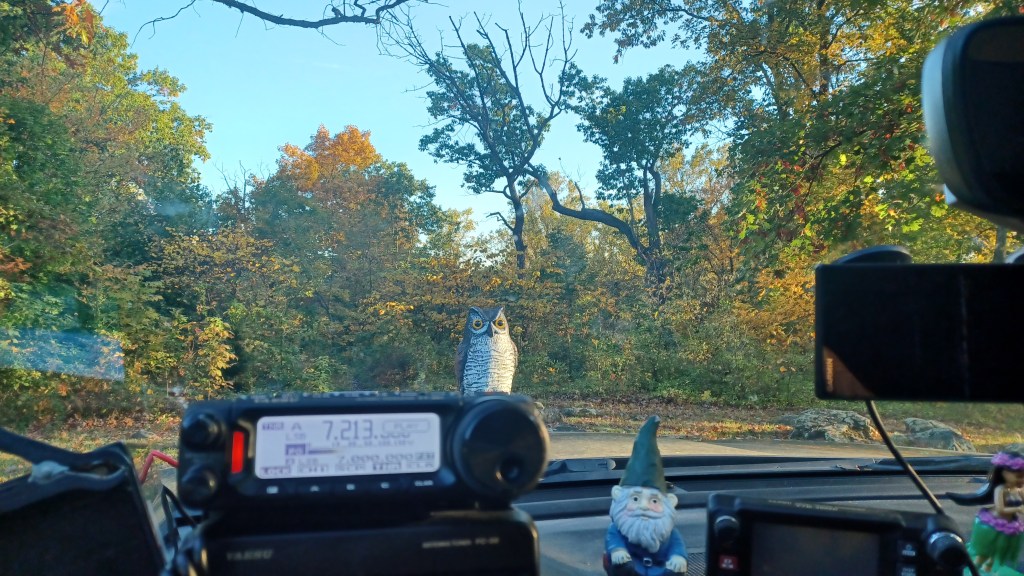
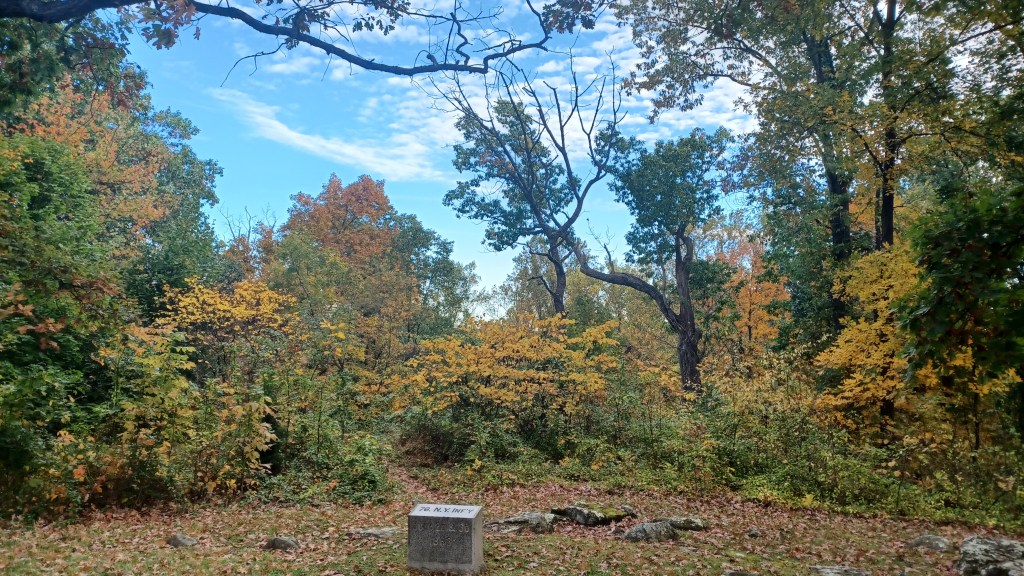
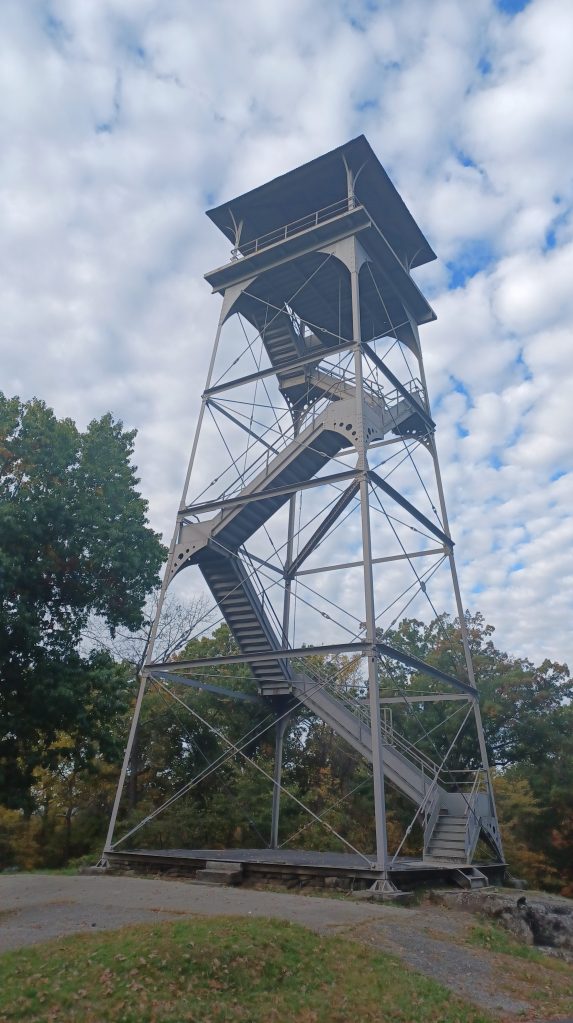
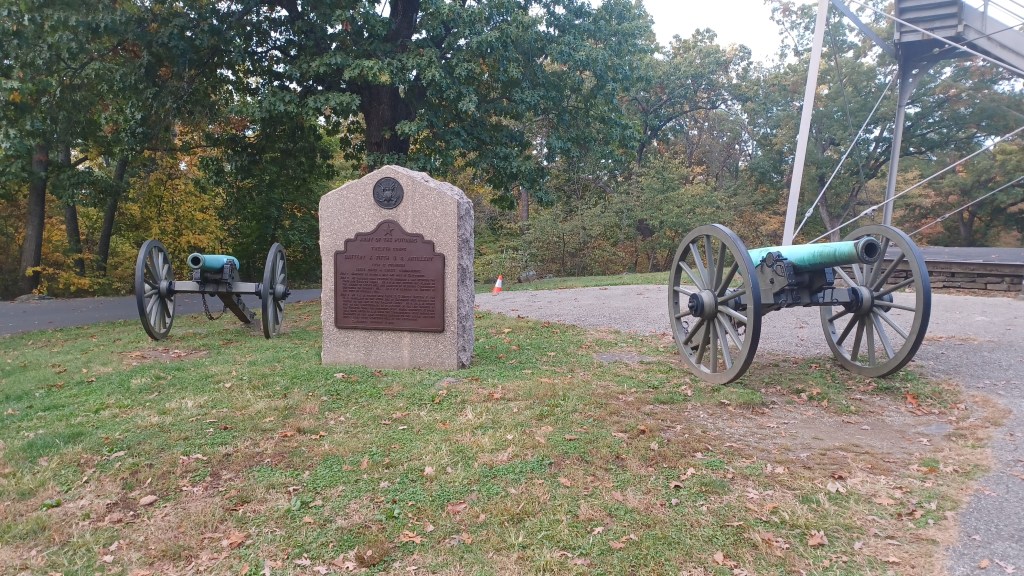
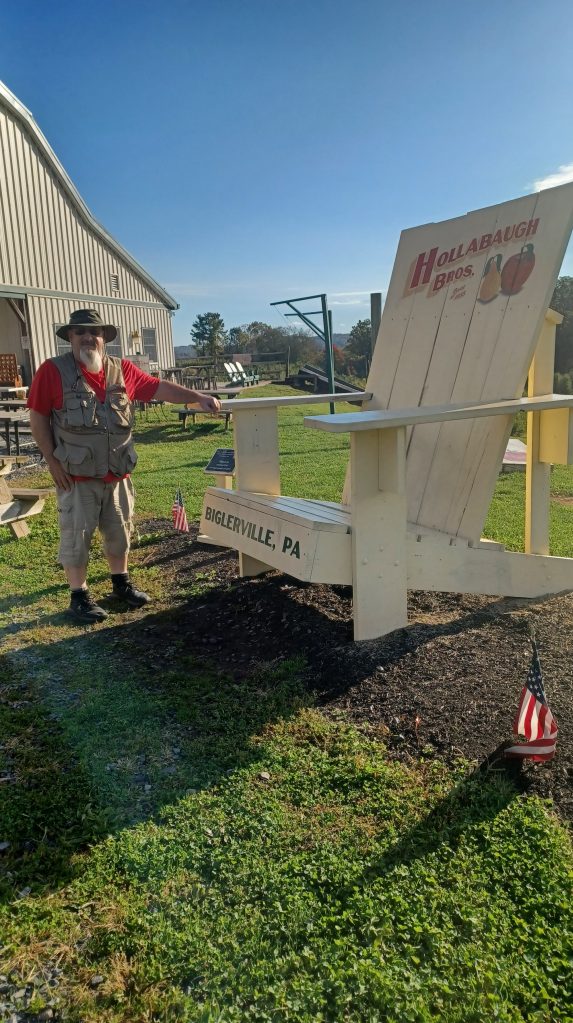
Today SWMBO and I activated Gettysburg National Military Park US-0027, one of my favorites. Culps Hill was deserted when we arrived and in the 45 minutes we were there we saw less that 8 people. I watched an older couple get out of their car with their dog who pulled them over to the tower. We did depart before they descended. Anyway, the activation went very will. I stayed on 40 M and worked 47 stations in about 40 minutes. Not too bad. Towards the end there were a couple stations that had moved in about 2 up from us in the band but they were not strong enough to really be a bother. As for birds, the only one my software heard was a red-bellied woodpecker. Afterwards we stopped off at Hollabaugh Brothers farm stand.
We did our groceries and then went home. As we were eating our lunch, SWMBO had a tooth that had been repaired about 25 years ago break. The good thing was that she had had a root canal back then and she wasn’t in any pain. We finally found a dentist who could take us on short notice as our dentist was busy. We got her looked and, in the process, got a new dentist. That whole ordeal destroyed other plans we might have had but I am glad we got things resolved.
Oh yeah! I can hear again! I had one of my ears get clogged, so I syringed the hell out of it and saved myself a trip to the doctor and a bill. Life is good. Well kids, time to close. Namaste and keep your stick on the ice!
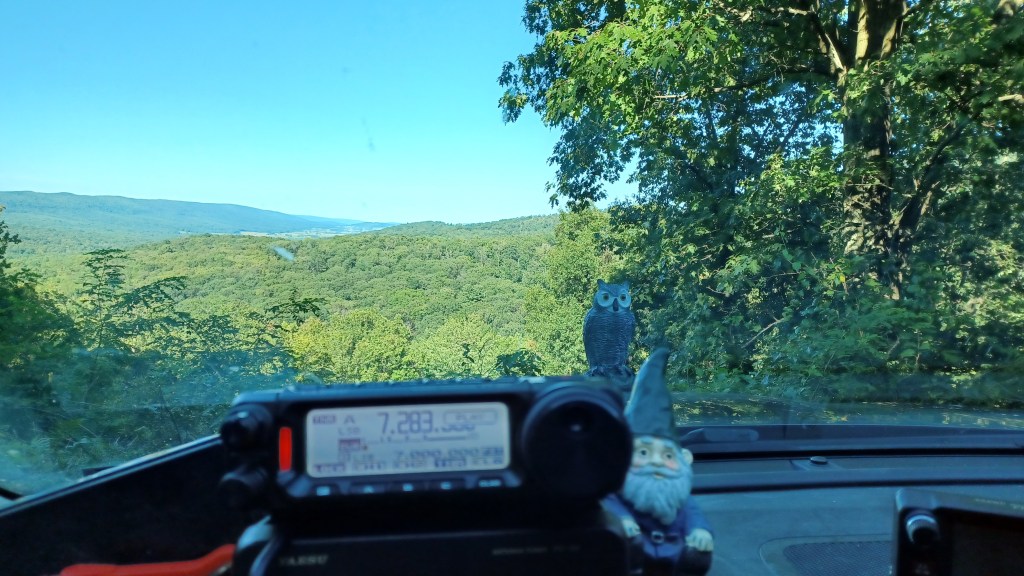
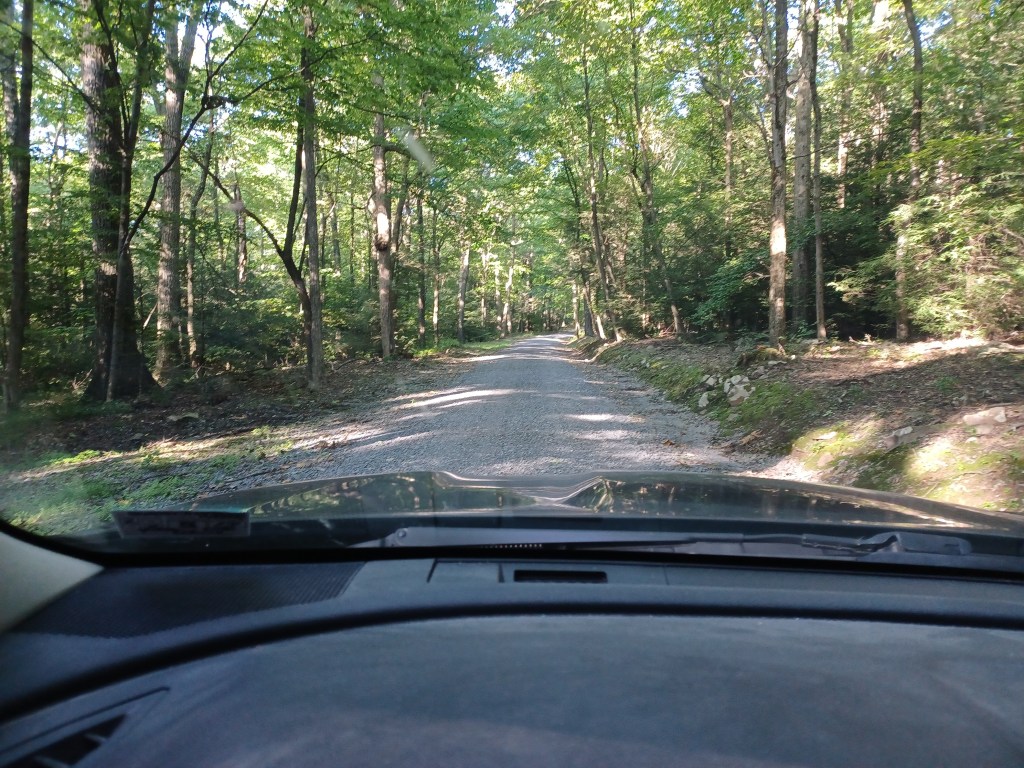
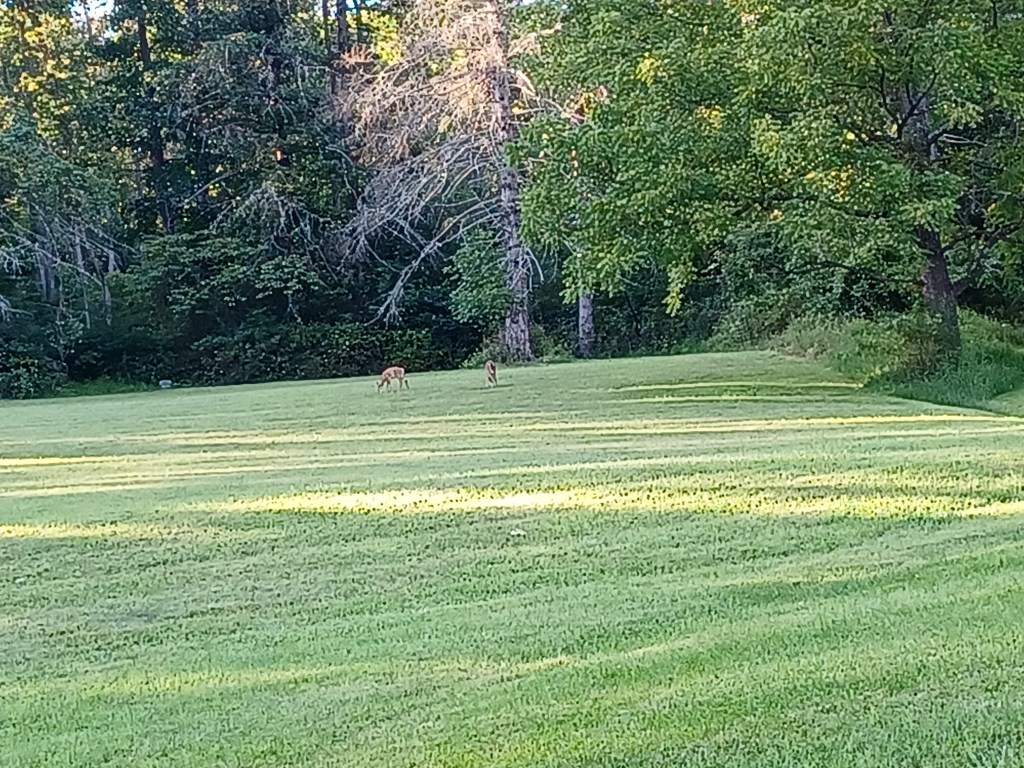
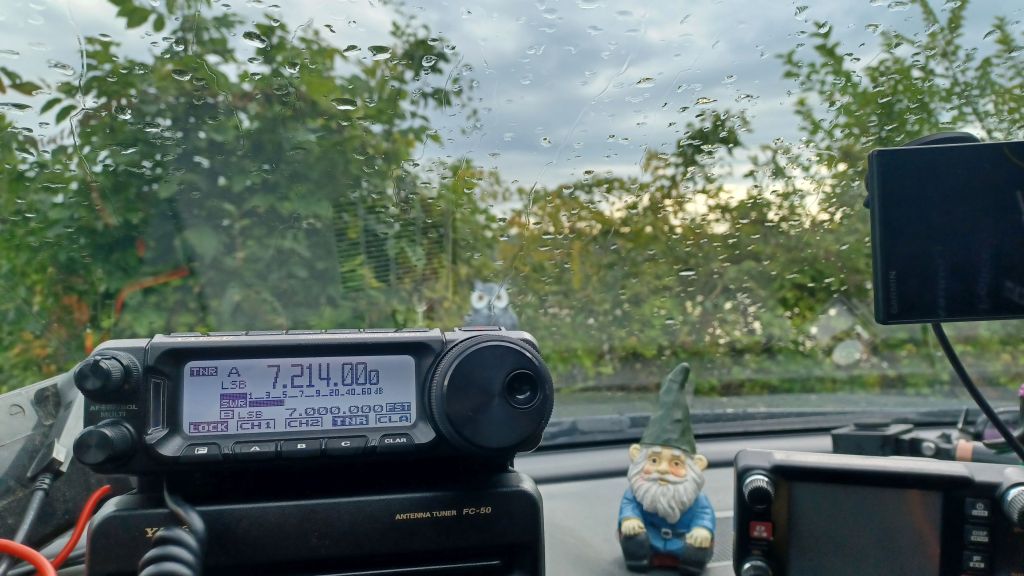
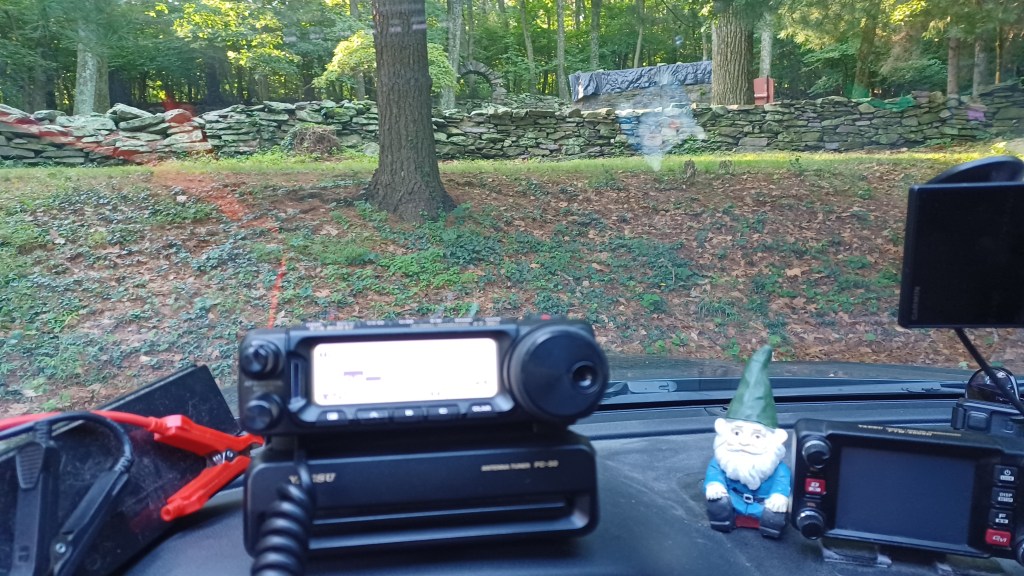
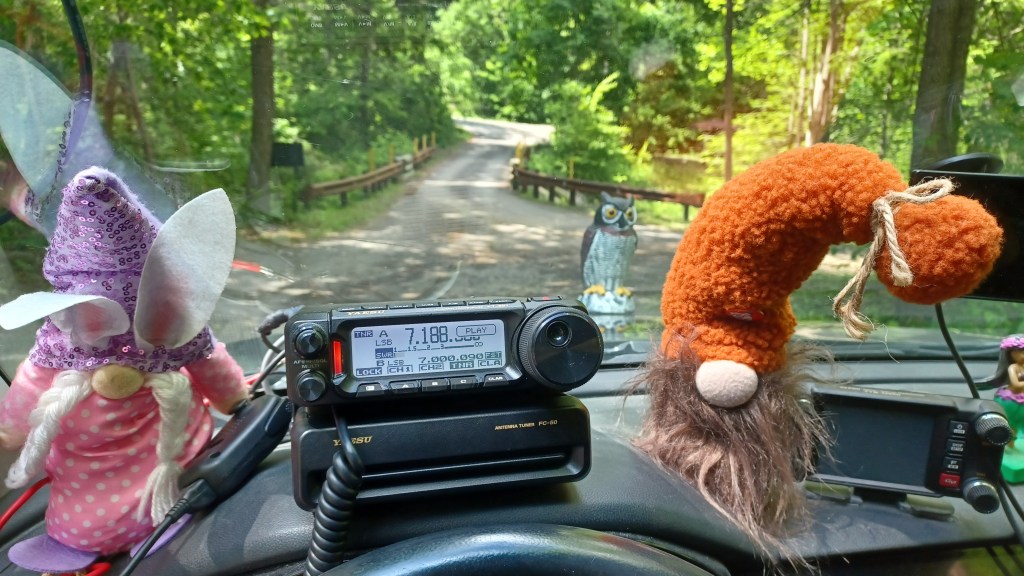
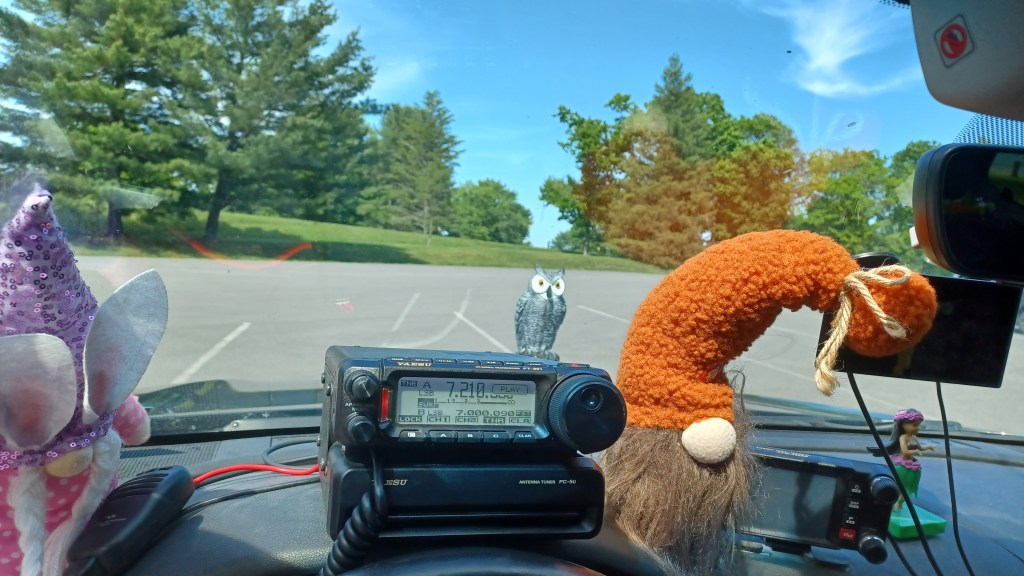
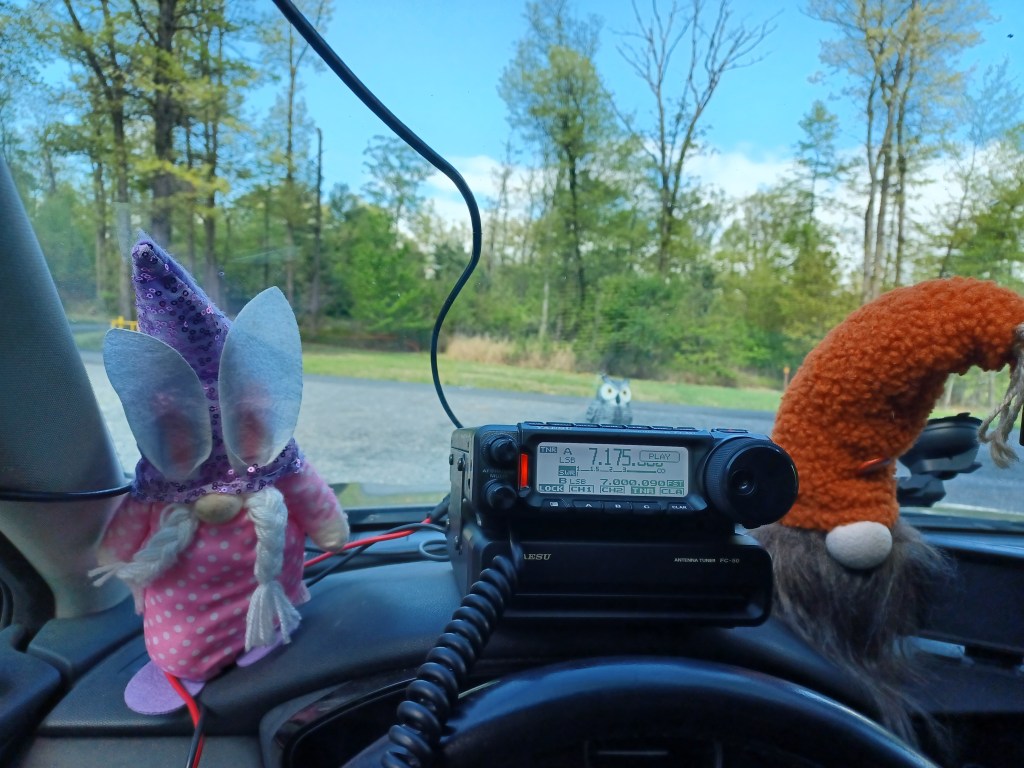
Tootsie the owl and Hubert the gnome enjoying Culp’s HillThe view from my car on Culp’s HillThe observation tower on Culp’s HillThe monument for Battery K 5th US Artillery They told me to take a seat. At Hollabaugh Brothers in Biglerville, PA
Hi Kids. I haven’t had an opportunity to activate as I am working extra to fill in for a co-worker. That doesn’t mean I am not radio active. When I can, I fit in some time to chase down activators from home. I can usually get on for an hour or so before work and I can always find someone on the bands.
In a way, hunting is paying forward for those who hunt me on an activation. There is an interdependence between hunters and activators. Without hunters there would be no activations and without activators there would be no hunting. I know there are sad hams out there who bitch about POTA folks using up the bands but I believe activity beats silence. POTA has been a great boon to the hobby as it increases band utilization and keeps hams active. Even sitting home and hunting keeps the mind active. It also gives a person a reason to adapt and to experiment.
My home equipment might not be the biggest and best but it works well. I have a Yaesu FT450 (the original model, not the “D”) which I bought back in 2007. I only run it at 75 watts and my antennae are dipoles of various sorts. I have an Alpha Delta DX-LB Plus which covers 160, 80, 40, 20, 17. 15 and 10 meters. It is a fan dipole with coils for 160 and 80. I also have a 30 M homemade dipole and a 12 M dipole, also homemade, which can tune on 6 M. I know this is a modest station, but it does the trick, even during solar minimums. My next projects are to raise the main dipole up a bit and to make a dedicated dipole for 6 M.
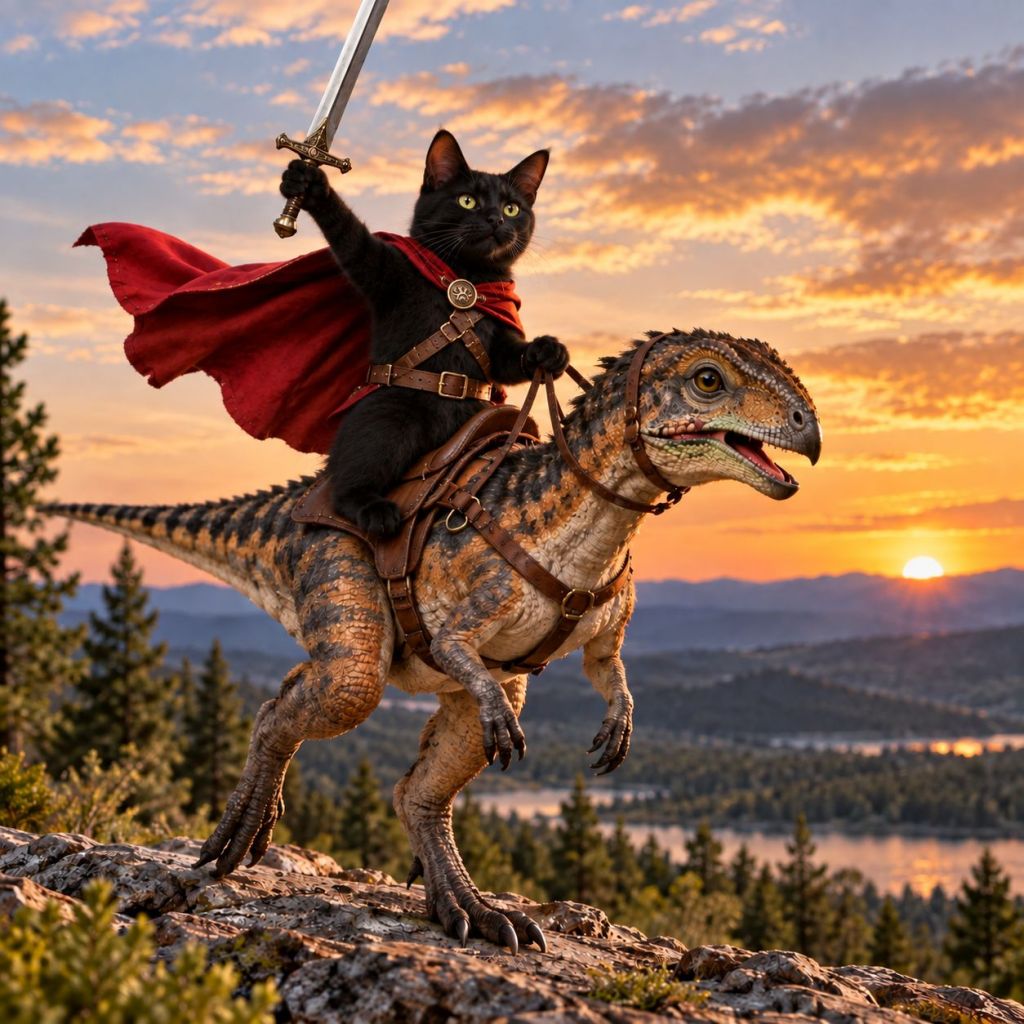
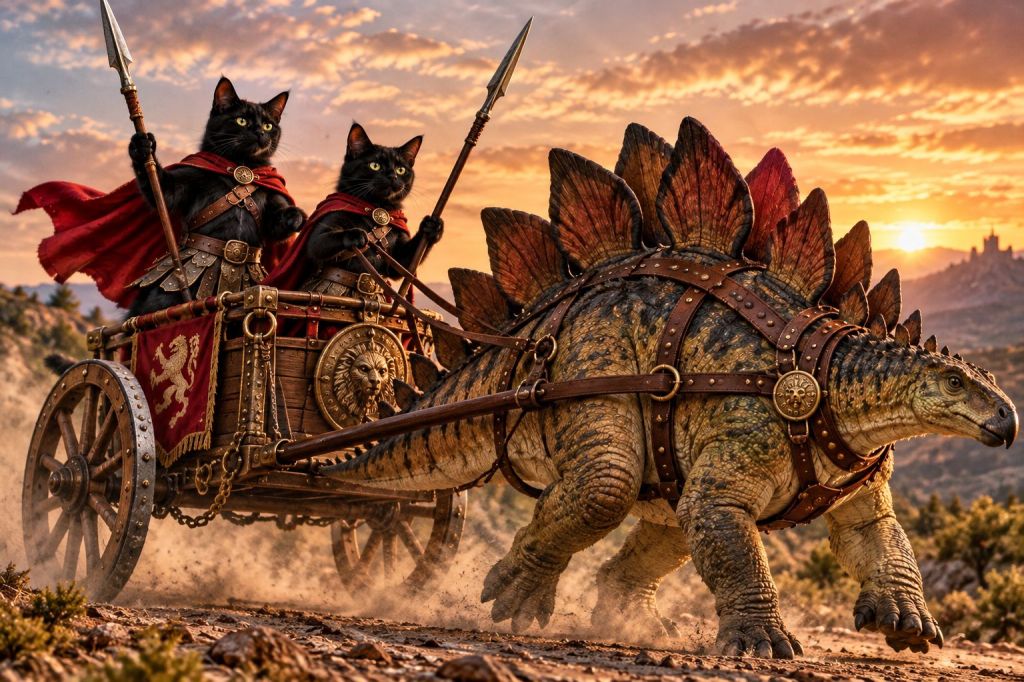
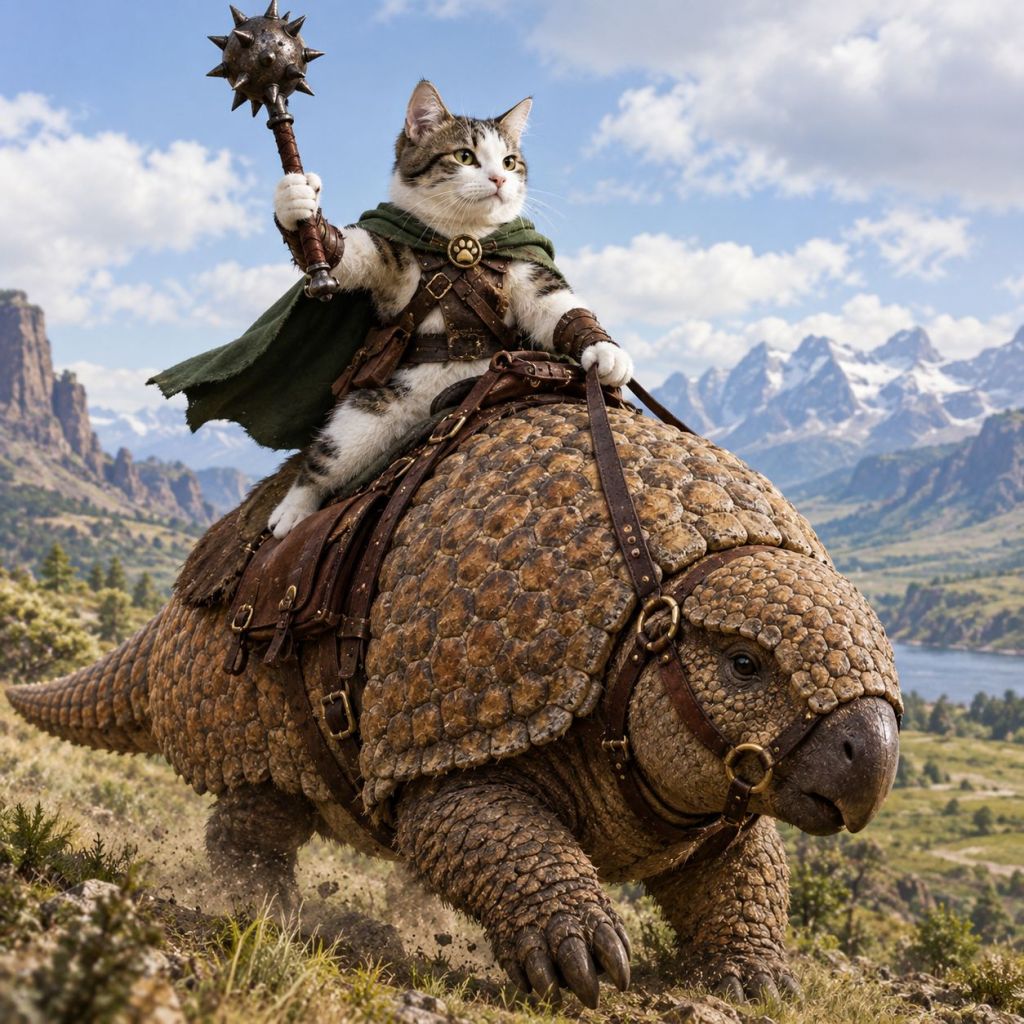
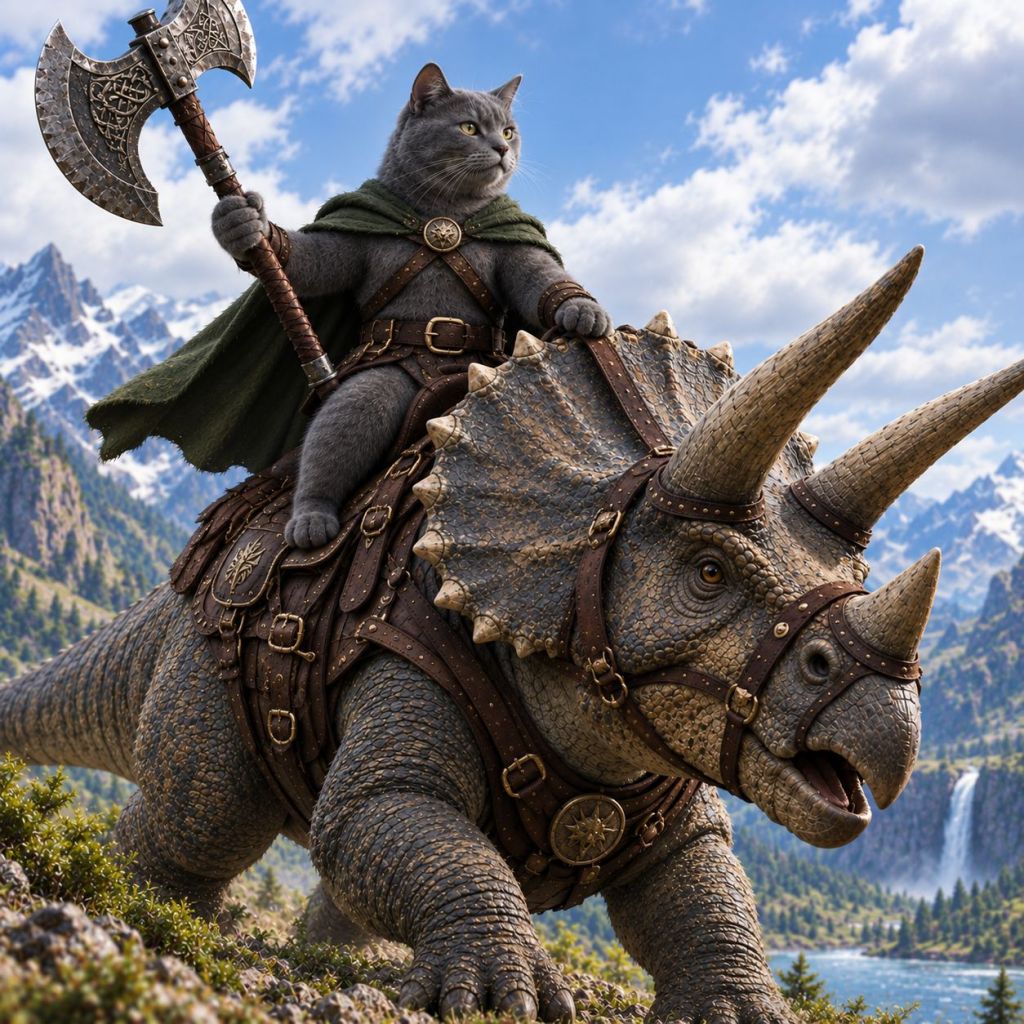
I will be activating during my next days off but just wanted to make an entry. Below you will find some AI generated pics of my cats that I made for fun. Whatever you do, get on the air at least once a day if you can. Don’t let your skills get rusty and your equipment dusty. Namaste for now and keep your stick on the ice.
Muffin on a heterodontosaurKalamazoo and Dipper in a stegosaurus drawn chariotCalamity on a glyptodontMayhem and Foggy riding to battle on ankylosaursScout riding a triceratops
Hi kids! I had an epiphany the other day. I was reading a ham radio group on a social media page. One person asked a question about doing off-the-air code practice on a Yaesu FT891. The person wanted to know how to practice sending without a signal going out over the air. He received several great answers and they were very helpful for a new ham who was enthusiastic and desired learning. The easiest way to do this is to go to the CW settings menu and disable the Break-in (BK-IN). By doing this your radio doesn’t transmit when the key is pushed but you can hear the side tone through the speakers or over headphones. Just make sure you turn it back on when you want to send over the air.
The above was an example of hams giving good answers and helping a newbie. I have also seen too many cases of the newbie being verbally assaulted by sad hams for not having the knowledge and for not just reading the manual. Have these people forgotten what it is like to be new? No one opens the top of your head and just dumps in knowledge; there is a learning process to everything. One of the worst things you can tell a newbie is “Read The Manual”. Most manuals are clearly written and are easy to understand … if you know what you are looking for. Using the above example, in the FT891 manual there is a section on CW operating. One part of the instructions is to turn the BK-IN on. It doesn’t tell you why or how to use the rig for code practice without transmitting.
My hat is off to those who are patient with newbies and offer good advice and support. I believe the term is mentoring. If you advise someone to RTFM, give them the tools to understand what they are reading. For those sad hams who must make their opinion heard no matter how useless or obnoxious it is, have a nice day.
Ok, I am off the soap box. Today SWMBO and I did an activation (after having to work 4 days in a row, it was my only chance in the past week). We went to Michaux State Forest US-5471. Band conditions were very bad, A 18, K 5. Amazingly I was able to work 16 on 40M and got stations in LA, GA, FL and MO which was a bit surprising for the band and time of day.
So, kidlets, namaste and keep your stick on the ice.
Howdy kidlets. Another week gone. I had a bit of a frustrating time this afternoon. I was in the middle of logging a contact and my ketboard stopped working. I changed the batteries and nothing. I removed the device and nothing. I ended up re-adding the keyboard and re-booting and, voila, it works! Gotta love it. Now combine that with trying to navigate government websites looking for information, I was really feeling disgruntled. Now I got the stuff straightened out and got the answers I need so I have been regruntled. 🙂
It has been a nice time since my last update. This weekend was pretty mellow. We did some shopping, we got stuff for my mother-in-law and we did a bit of work around the house. Also, I played radio.
Yesterday we took a drive up to the Hemlock Road Overlook in Western Perry County in Tuscarora State Forest US-5479. It is a nice spot to sit and watch the valley and has a good elevation for working radio. The 40 Meter band was not in good shape, though. Lately the bands have been up and down and this weekend was pretty dismal, but I was able to work 11 stations, including 3 park-to-parks. A few cars rolled past us and we had a courteous motorcyclist drive up. He parked next to us, took some pictures and, seeing what we were doing, he pushed his bike away from us before starting it. Kudos for him. 🙂
Now a few words about band conditions. We have past the peak of the 11-year cycle and for the next few years, conditions will be less good than they have been. The higher frequency bands will seem to diminish, and more and more activity will shift to 14 MHz and below. I would suggest making sure you have capabilities on the 40- and 80-Meter bands as they will really start to shine, especially at night. If you do CW or digital modes, 30-meters might be an option as the antennae are shorter than for lower bands (14.1 meters for 10MHz ad opposed to 19.8 meters for 7.18 MHz or 38.3 meters for 3.725 MHz). The other bands will not go away but there will be fewer openings. One band that might surprise you, though, is 6 Meters. It can open at seemingly random times and stay open for various intervals. I have known people in the past who keep a radio tuned to the 6-meter band on frequencies where beacons are, listening for openings. Some of them have, with patience, achieved the “worked all states” award on 6 from the ARRL, which is a real accomplishment.
Well that is all for now, I guess. Namaste kids and keep your stick on the ice.
Hemlock Road OverlookA view driving up Hemlock RoadA couple of ruminants having a snack at an undisclosed location.
Hi kidlets. It has been a very nice break for the last week, but now I am facing a return to work tomorrow. We spent the day doing chores like beating Satan’s Putting Green into submission with a mower, a weed wacker and some agent orange for the remaining bamboo. Unless you are prepared for a very intrusive plant which is difficult to get rid of, never plant bamboo.
SWMBO and I had a nice day yesterday. We went to Susquehanna State Park US-1601 in Maryland. It was raining when we got there but it soon stopped. It is a nice quiet park and we worked 26 contacts in less than a half hour. When we first pulled in, we had a little cute thing approach the car before trolloping back into the woods. You can find a link to the video of the approach below. On the way back we took the secondary roads and had a very scenic drive before stopping for lunch in Carlisle PA.
One item I carry in my POTA box is an RF Exposure worksheet which details the exposure limits for the frequencies I use. If anyone were to ask, it is available as required by the FCC since 3 May 2021. If any are interested, here is a link to the calculator: https://www.arrl.org/rf-exposure-calculator It is easy to use and understand and I have over-estimated my output and antenna gain to fall well within the limits for safety.
I also have on hand documents which I have printed from the internet detailing what POTA is, what ham radio is and why I am sitting there in a State Park talking on a radio. So far, I have had a few people interested who came over and asked questions. I have done my best to answer them and make a good impression.
Wello, for now I am going to say adieu. Namaste and keep your stick on the ice.
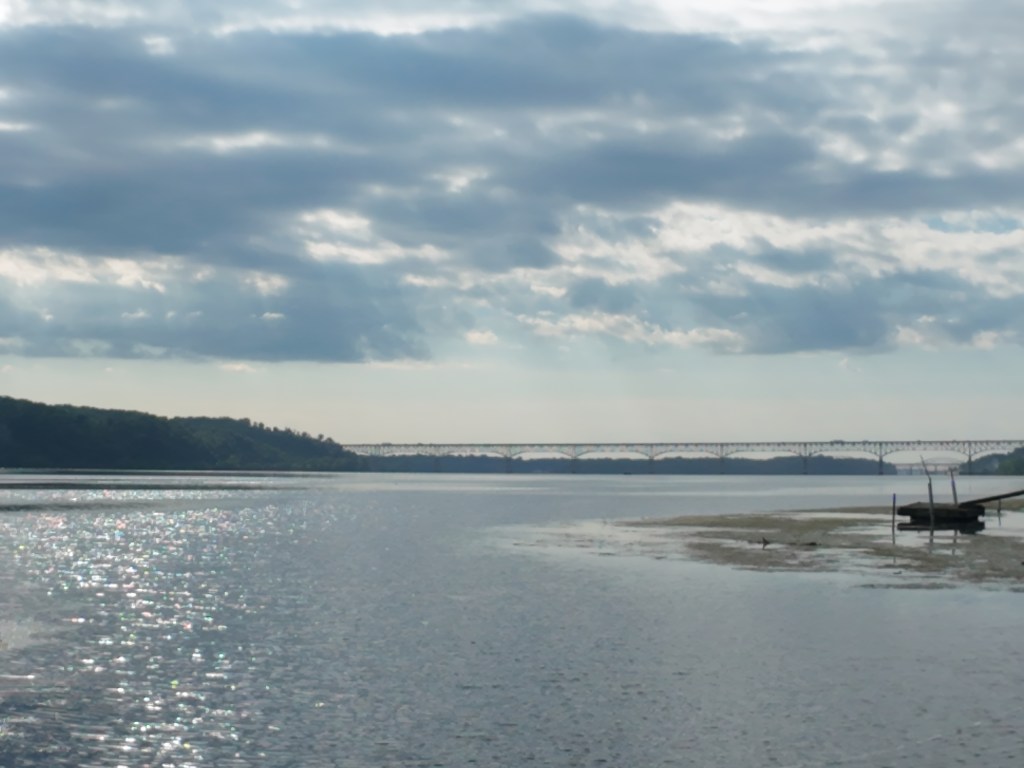
looking downriver from the boat ramp at Susquehanna SPHubert the gnome and Ollie the owl look on as I play radio
This is a scary thought: I caught a glimpse of my reflection in a window and realized that if I wore a pointed hat I would look like a gnome!
I guess I should start with National Night Out. This year it was help on 4 August. We (The Perry County Amateur Radio Club) set up a booth at the Landisburg Fire Department. This being a community event, they had a good turn out. Right from the start there were people wandering the grounds and participating in the activities. We had radios set up for demonstrations and literature to hand out. The idea was to provide to the community information on ham radio and how it benefits the local area.
Yesterday was uneventful. It was rather dismal. We did our shopping. Nothing much to talk about unless you want our grocery list.
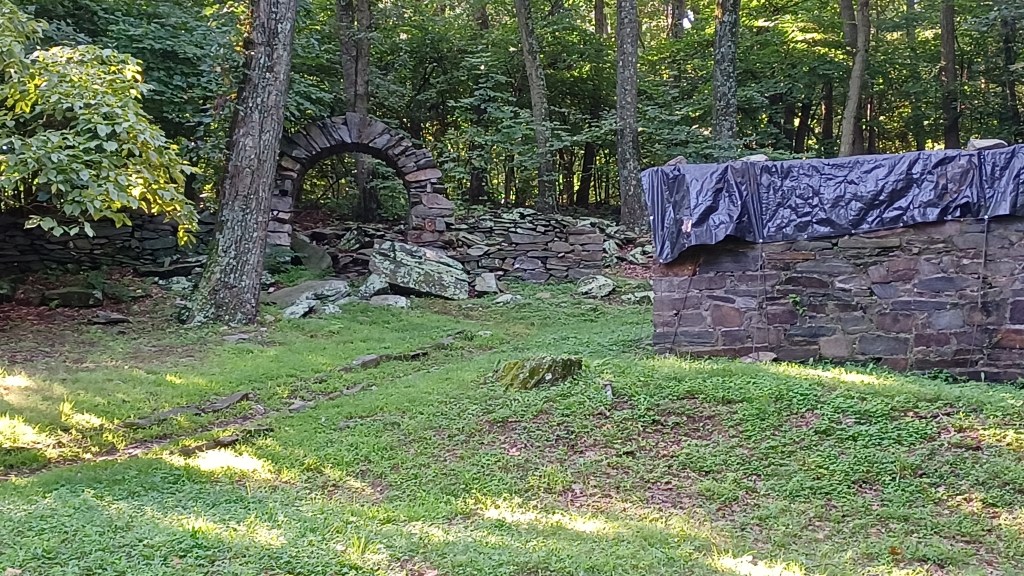
This morning we left home at 6AM and arrived at Gathland State Park (US-1574 and US-4556 The Appalachian Trail) and got on the air by 0817. Within a half hour we worked 35 stations before it got too hot to sit there. We had one net (MidCars) ask us to move, which I gladly did as they were polite and ,considerate. The spot we moved to was the location of another net but they did not start until we were done. A park ranger drove past, checking us out but did not stop. As I was starting to pack up, a man in his early 20s came over and he expressed interest in what we were doing. He was doing a hike on the Appalachian Trail and was carrying a GMRS. He was interested in ham radio and is studying for his license. I gave him a description of POTA and how it is a good way for fat old hams to keep active.
Over the course of the day we heard the following birds: American Robins, Northern Cardinals, House Finches, Mourning Doves, Chipping Sparrows, Northern Mockingbirds, Tree Swallows, Eastern Wood Peewees, Red-eyed Vireos, Cedar Waxwings, Yellow-throated Vireos, White-breasted Nuthatches, Carolina Wrens, and Ruby-throated Hummingbirds.
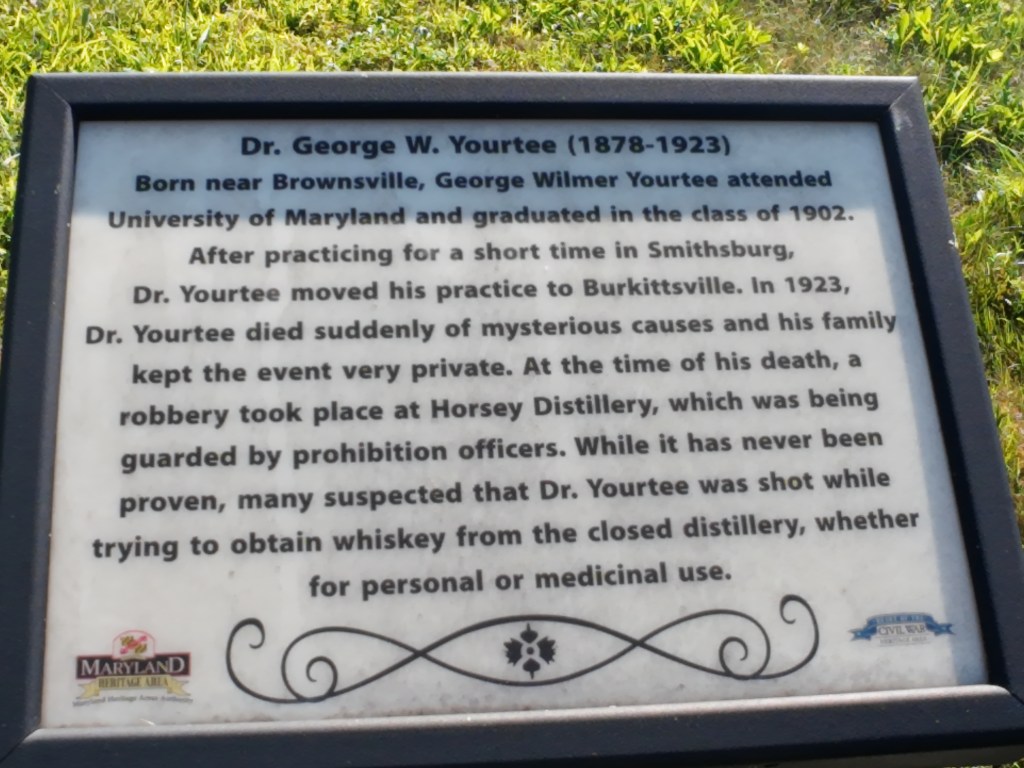
After this we went down to the cemetery in Burkittsville and did some photography.
I can’t stress enough the importance of making a good impression on others. When I interact with people I try to leave them with a positive attitude toward radio.
I asked CHATGPT to come up with 10 ways to promote POTA and ham radio and here is the list: Parks on the Air (POTA) is one of the best gateways into amateur radio because it combines technology, the outdoors, and friendly competition. Here are ten practical ways to promote both ham radio and POTA in your community.
Host a “Try Ham Radio” POTA Activation
Invite the public to a local park.
Let visitors listen to contacts and, under FCC rules, make supervised contacts using your station.
Bring brochures explaining how to get licensed.
Create Short YouTube Videos
Produce 30-60 second videos showing:
Setting up an antenna in a park
Making your first contact
Portable radios
Wildlife and scenery
“A Day in the Life of a POTA Activator”
Keep videos entertaining rather than overly technical.
Offer “POTA Discovery Days”
Your club can organize monthly outings where newcomers only need to bring a lawn chair.
Experienced operators provide radios, antennas, and coaching.
Partner with State Parks
Ask park managers if you can demonstrate amateur radio during park events.
Emphasize emergency communications, outdoor recreation, and STEM education.
Create an Information Packet Include:
What is Amateur Radio?
What is POTA?
How to Get Licensed
Local club information
Upcoming activations
QR codes linking to your club website and the POTA website.
Speak to Community Groups Offer presentations to:
Libraries
Scouts
Hiking clubs
Historical societies
Senior centers
Schools
Emergency preparedness organizations
Share Interesting POTA Stories People love stories more than technical specifications. Examples include:
“We talked to Alaska from a Pennsylvania park.”
“This tiny radio reached Australia.”
“We operated entirely from solar power.”
“A family joined us and made their first radio contact.”
Host a Friendly POTA Challenge Organize a club event such as:
Activate five parks in one month.
Work all state parks in your state.
Make 100 park contacts.
Operate from every county park in your county.
Award inexpensive certificates or small prizes to participants.
Bonus Idea: “Ham Radio Meets Hiking”
Many people aren’t interested in radio alone—but they are interested in outdoor adventures. Promote POTA as:
Hiking with a purpose
Camping with communication
Technology without the Internet
Emergency preparedness
Family-friendly outdoor fun
Photography and radio combined
Instead of saying “Come learn about ham radio,” try saying:
“Join us in a local park and see how we can talk across the country—and around the world—with nothing more than a battery, a wire antenna, and a radio.”
That kind of demonstration sparks curiosity and often leaves a stronger impression than simply describing the hobby. For clubs like the Perry County Amateur Radio Club, regular POTA outings combined with YouTube Shorts and local newspaper coverage can be an especially effective way to attract new operators and show that amateur radio is an active, modern outdoor hobby rather than just something done from a home shack.
I believe that is a good list with some ideas to think about. Well, time to go for now. Namaste, kids, and keep your stick on the ice.
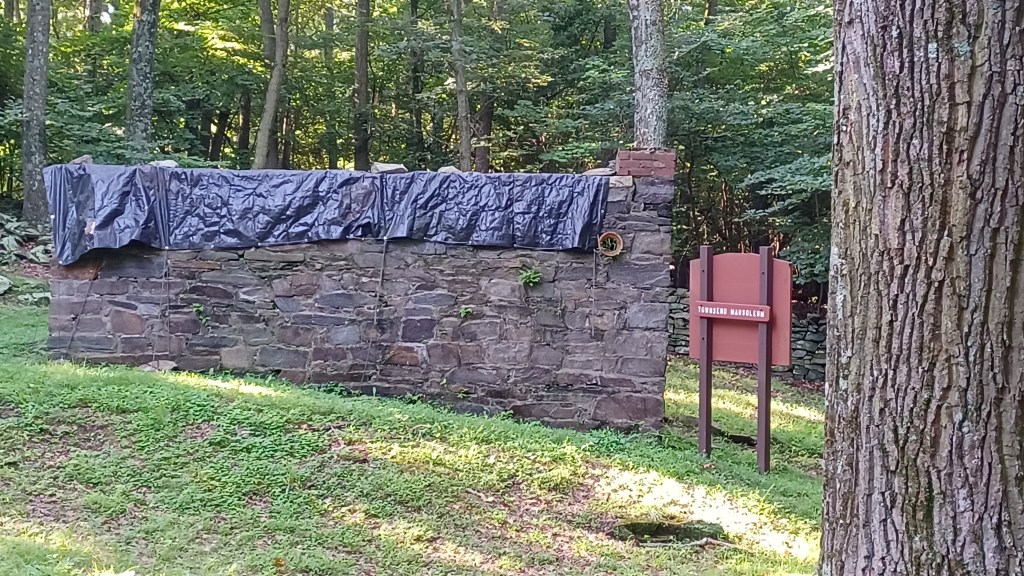
Hubert the gnome enjoying radioThe old mausoleum at Gathland.The gateway to the old cemetery at GathlandA notable grave markerInformation on Burkittsville Cemetery
Sometimes it is too easy or comfortable to focus on success or on positive outcomes. Today I am taking a different path.
SWMBO and I set out to have a picnic style lunch and to activate the Vista at Three Square Hollow. We proceeded to Jaymee Lee’s Quick Stop in Newville, PA. This little store with rustic charm makes the BEST chicken tenders. I can’t say enough good about their chicken, especially the tenders. Hot and fresh and moist with the perfect coating. They are fresh because they are constantly having to make more as they sell out fast. Anyway, we got a couple tenders and some coleslaw and took a drive up to the Vista. As we ate, I watched with trepidation as the clouds lowered and the temperature also dropped. We finished eating and before I could set up my radio and antenna, the thunderstorm hit. Sitting on top of a ridge in a lightning event while using a transmitter is not the best of ideas. We un-assed the area.
As we drove down the gravel mountain road, the rain got more and more intense. We could hear the thunder from within the car. We made it back home, but I had to venture back out into the storm as we had forgotten an important item from our grocery list: toilet paper! After I got back from the store I stood on the porch and recorded the video I am linking to below.
I cannot stress enough the importance of safety in the ham radio hobby, especially in a lightning storm. Aside from the loud static crashes, there is always the possibility of a nearby strike. It is a good idea to disconnect your antennae from your home station and to have surge protection. Lightning can take some surprising paths in its search for ground. Always make sure the grounding on your tower is good (if you have one) and make sure your station is bonded to a single ground point suck as a cold-water pipe or a long ground rod (at least 2 meters pounded into the ground).
Ok, there will be other opportunities for a safe activation, and I foresee at least one coming up in the not-too-distant-future. In my usual fashion, Namaste kids and keep your stick on the ice!
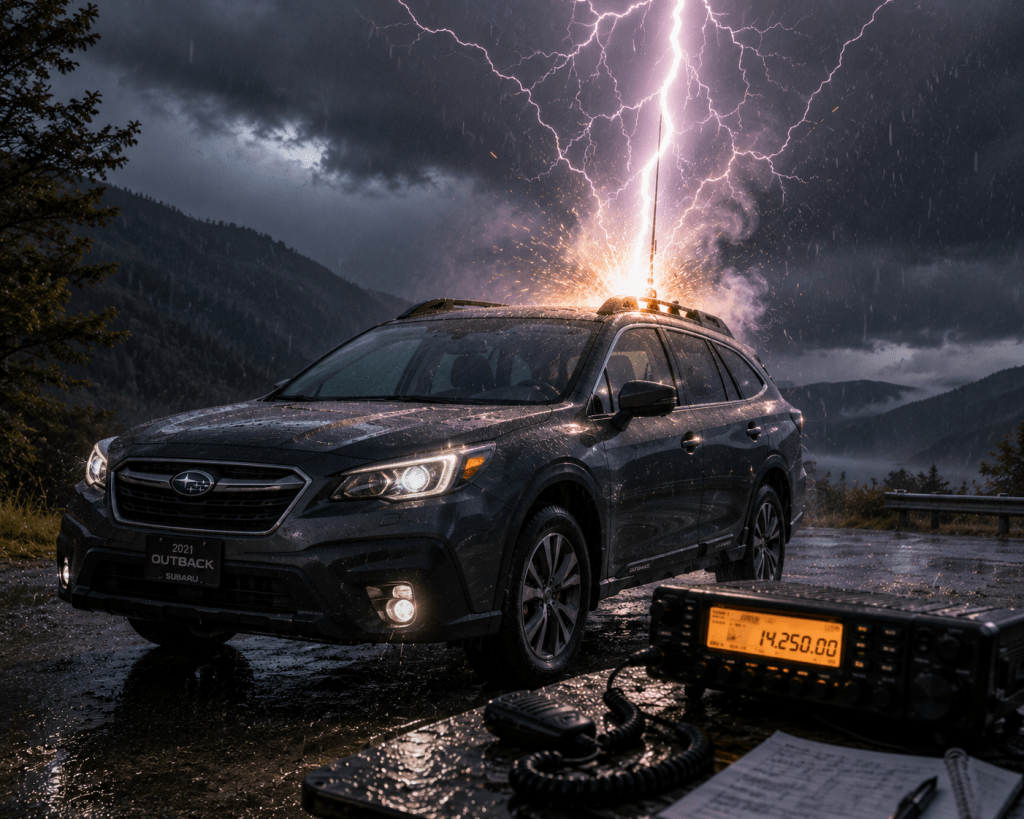
The image features a photo-realistic 2021 Subaru Outback with a ham radio installation as lightning dramatically strikes the vehicle during a powerful storm. Amazing what you can do with AI. 🙂
Hi kids. Time for another entry in my blog. I hope you are all well and enjoying the late Spring weather.
Why do I do POTA activations, you may ask? Well that is something to answer. I first started doing ham radio as a hobby back in 1998. I saw it as an extension of my electronics degree and discovered how fun it is. The club I belonged to did communications for local dirt bike and bicycle races. The races were held (and still are) in an area that has almost no cell service; also you have to learn the tricks to getting a radio signal out. There are spots where if you roll your car 2 meters (6 feet) forward or back it can go from no signal to a strong (full quieting) signal. Mostly it was on the 2 Meter band and using a repeater but there were places where it was necessary to use relays from check points back to the marshalling area where the net control was set up.
After a while I upgraded my license to where I could use the HF bands. This allowed for longer distance communication from home and from out in the field. I got hooked on using CW (morse code) and QRP (low power) both from home and operating from a remote location. I would drive out to a park or other area such as a ridge and operate portable. This gave me quite a bit of experience with various types of antennae, band conditions and weather. I was ridiculed by the then club president (now a silent key) who would mock me for having a “peanut whistle” signal which no one would hear. I ignored him as hard as I could.
Fast-forward to 2023 when I first started working POTA stations and then finally to activate parks myself. I found it a great way to get outside and to operate away from the house. I enjoy nature and love sitting in the woods and taking it all in. I also enjoy experimenting with different set ups . It is nice to receive the achievement awards available but the main satisfaction I get is from setting up in a park and making a bona fide activation (working at least 10 stations). So, basically, I do it because I can. It also allows me to keep my skills sharp and to learn new things.
Today, Sunday 7 June 2026, I did yet another activation of Big Spring State Park US-4335. The weather was great with partly cloudy skies and a temperature of 33 C (92 F) that became 30.5 C (87 F) under the trees of the park. There was a good amount of traffic in the area, on the main road and also people walking through the park. I even got some curious looks from a trio of men on those skateboard things which have only 1 wheel in the middle of the board. I stayed there and was able to work 12 stations on 40 meters in about an hour. I heard the following birds: red-eyed vireos, american redstarts, acadian flycatchers, eastern wood-pewees, carolina wrens and ovenbirds. A nice assortment and pleasant to listen to.
Well enough for now. Namaste, kidlets and go out in nature!
Ptolomey, Missie and Moxie enjoying a day at the park.
CQ Parks On The Air … CQ Parks On The Air .. this is KB3CVO , KB3CVO calling CQ POTA and standing by. The call rings out over the air and the pause for a response and then calling again. You know the formula. Sometimes the replies come fast and furious, sometimes there is a few minutes between hunters; it makes no real difference depending on how you see things. Sometimes, I need to take a deeper look into things rather than coasting along on auto-pilot.
And then it happens: the “sad ham” chimes in and makes a negative or derogatory remark. Sometimes these grumpy folks just tune up on your signal without saying anything. They don’t seem to identify themselves as they are well aware that they are in the wrong. No matter, they do it anyway. I know we have all had a “sad ham” admonish us for using “their frequency” or “a net frequency” or using a band for something they do not approve of.
I believe this comes from a fear or discomfort caused by anything new or different. Just as chickens will peck at a bird that is different, these “sad hams” will peck at things they are not used to. It happened (long before my time in ham radio) when SSB became popular and the “sad hams” of the day were complaining about SSB signals sounding like duck speak and crowding out the pure, clean AM signals. It happened when PSK31 and other digital modes came along; lots of noise and complaints from “sad hams”. To this day, I hear complaints about contesters using up all the bandwidth.
In any event, I do what I enjoy and do my best to keep to the regulations.
Yesterday it was rainy to start out (Wednesday May 27th) which changed my plans a bit. After I got up, we went to lunch and then I tackled the yard with my weedwacker (strimmer for those Brits who may be reading this). I cleaned the edges of the yard up and chopped down some more bamboo. I couldn’t mow as the grass was still too moist from the rain so weedwacking was the limit. I then went out to Little Buffalo State Park.
SWMBO wasn’t feeling very POTAish so I went to Little Buffalo State Park US-1376 alone. The weather had cleared and it was sunny and temperature was about 29C (85F). I parked facing away from the sun and spent the next 45 minutes working 23 contacts, 3 of which were Park-to-Parks. Conditions were a bit rough but that happens. I heard the following birds: Eastern Warbling Vireos, Red-winged Blackbirds, Cedar Waxwings, American Robins, Chipping Sparrows, Killdeers, Eastern Bluebirds, American Goldfinches and Eastern Kingbirds.
The main event for today (aside from getting groceries) was performing an all-out assault on Satan’s Putting Green with my lawnmower and an attitude. The weather was nice and sunny with a temp of 26 C (79 F) and I was able to get it done in about an hour. We then went to the local Lowes and got face shields for when I get the wood-chipper going.
I guess that is all for now. Namaste and keep your reality within the boundaries of sanity.
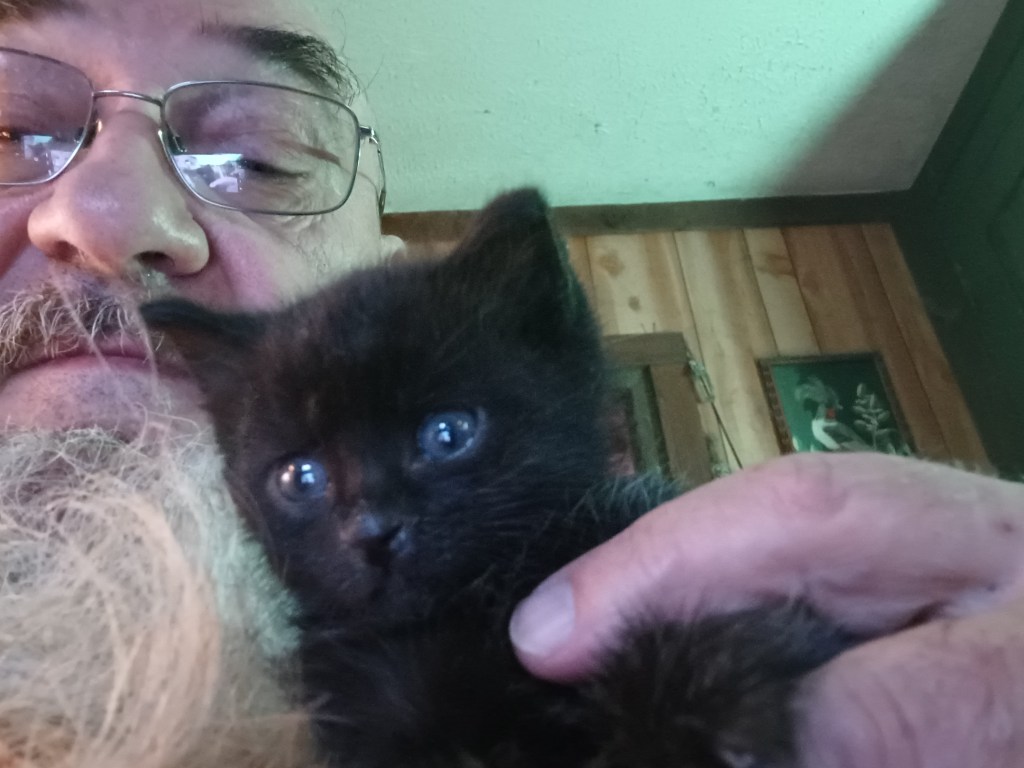
Moxie, Ollie and Missie watching my 6Muffin and I having some quiet time
Sometimes my ideas don’t work out well. About 6 years ago I purchased some bamboo plants to use as a screen for a ditch that runs through my yard. For the past 2 years I have been fighting with the stuff. It is cool looking, but, however, it does take over and grows about 7 meters high. Our view is obscured. I have been thinning it, but the shoots are coming up all over the place. I have pulled up the runners when I can, and I cut the new growth off, but the stuff has a very strong survival drive. Today I used the remains of a can of weed killer on some of the shoots and we will see if that works.
So: Spring advances. Tomorrow is the first day of May which means that in about 50 days it will be Summer. It is a good time to go over your radio equipment/kit to make any needed repairs and any necessary upgrades. Check over your coax visually and then do any tests you feel like doing such as continuity. If you use wire antennae for a portable setup then inspect the wire for frays and burrs. Verify the SWR on the antenna at the appropriate frequencies. Inspect any portable antennae such as base-loaded verticals or Hamsticks. Make sure all your connectors are free from corrosion. Make sure your batteries are in good condition and verify the charge. Take an inventory of your stuff and get any replacements you might need. Do basic maintenance on your toolkit. These things should be completed quarterly and really don’t take up much time. In my experience it is the little things that will cause you the most grief if you forget about them. Ever head out to the field and realize upon arrival that you have left something at home such as your battery or antenna? Just in case, always have an alternative in mind for an antenna. Ok, enough of the OM advice.
Today was a nice day. A comfortable temperature (15.5 C or 60 F) and we went to King’s Gap State Park US-4361. This was my 21st activation there and we both (SWMBO and I) like the place. For the most part it is quiet during the week. We like to park at the trailhead parking lot at the top of the hill away from the mansion. Usually, we don’t encounter people but today we had a couple rangers drive past and wave. I was using a 40M Hamstick (an original Lakewood that I have had for years) and the band was in pretty good shape. We logged 25 contacts in about as many minutes, one contact being KB3PSN, out club president.
The drive up to King’s Gap runs about 6KM uphill through a nice scenic forest. There are a few curves, and it is a bit narrow in places, but it is a pleasant drive. One of the spots you can stop at on the way up (or back down) is a small pond where you can see some of the local amphibians and the aquatic plants. Near the mansion on top is a flower/herb garden maintained by local flora fans. At one end is a small pond with local water plants and lots and lots of frogs which stop singing when you get too close. There are picnic tables available and there is a fantastic view from the porch of the mansion overlooking Cumberland County
The birds we heard were Blue-Grey Gnatcatchers, Oven Birds, Tufted Titmouses (titmice? I am still uncertain which it is), Brown-Headed Cowbirds and Eastern Towhees.
After we made our way back to Carlisle we stopped for a meal at the Dickenson Restaurant. They make really good food. They used to be the Newville Diner but had to move due to water issues in their old building.
Okay, I have rambled on and now am done. I will drink some coffee and try to find some parks on the radio. Namaste, all, and try to sync your reality with what is genuine.